 Lupita
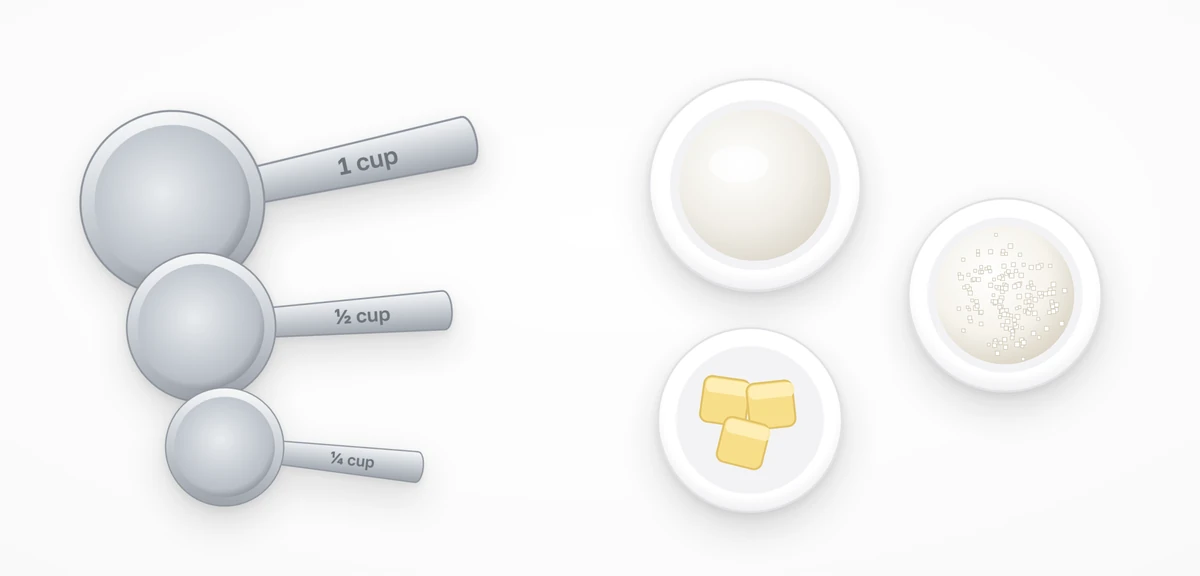 Measurements
How Many ml in a Cup? US, Metric and Imperial Explained
The short answer: 1 US cup = 236.6 ml. But there are three different "cups" used in recipes around the world, and mixing them up can ruin a recipe. This guide covers all three, with a full conversion chart for every common cup fraction.
The three cups — which one is in your recipe?
| Cup type | ml | Used in |
|---|---|---|
| US customary cup | 236.6 ml | US recipes, most TikTok/Instagram creators |
| Metric cup | 250 ml | Australia, Canada, New Zealand |
| Imperial cup (UK) | 284 ml | Old UK recipes (pre-1970), rarely used today |
If a recipe doesn't specify, assume US cups. If a recipe is from Australia or New Zealand, use 250 ml. Modern UK recipes use metric (grams and ml), not cups.
US cup fractions to ml
| US cups | ml (exact) | ml (rounded) |
|---|---|---|
| ⅛ cup | 29.57 ml | 30 ml |
| ¼ cup | 59.15 ml | 59 ml |
| ⅓ cup | 78.86 ml | 79 ml |
| ⅜ cup | 88.72 ml | 89 ml |
| ½ cup | 118.29 ml | 118 ml |
| ⅝ cup | 147.87 ml | 148 ml |
| ⅔ cup | 157.73 ml | 158 ml |
| ¾ cup | 177.44 ml | 177 ml |
| ⅞ cup | 207.01 ml | 207 ml |
| 1 cup | 236.59 ml | 237 ml |
| 1½ cups | 354.88 ml | 355 ml |
| 2 cups | 473.18 ml | 473 ml |
| 3 cups | 709.76 ml | 710 ml |
| 4 cups | 946.35 ml | 946 ml |
Metric cup (250 ml) fractions
| Metric cups | ml |
|---|---|
| ¼ cup | 62.5 ml |
| ⅓ cup | 83.3 ml |
| ½ cup | 125 ml |
| ¾ cup | 187.5 ml |
| 1 cup | 250 ml |
| 1½ cups | 375 ml |
| 2 cups | 500 ml |
ml to US cups — reverse lookup
| ml | US cups | Closest fraction |
|---|---|---|
| 30 ml | 0.13 cups | ⅛ cup |
| 60 ml | 0.25 cups | ¼ cup |
| 80 ml | 0.34 cups | ⅓ cup |
| 100 ml | 0.42 cups | a little under ½ cup |
| 120 ml | 0.51 cups | ½ cup |
| 150 ml | 0.63 cups | ⅝ cup |
| 160 ml | 0.68 cups | ⅔ cup |
| 180 ml | 0.76 cups | ¾ cup |
| 200 ml | 0.85 cups | a little under 1 cup |
| 240 ml | 1.01 cups | 1 cup |
| 300 ml | 1.27 cups | 1¼ cups |
| 400 ml | 1.69 cups | 1⅔ cups |
| 500 ml | 2.11 cups | 2 cups |
Cup vs ml in cooking: which is more accurate?
For liquids (water, milk, broth, oil), cups and ml are interchangeable with reasonable precision — a measuring cup marked in ml is the same tool. For dry ingredients, volume (cups) is less accurate than weight (grams) because density varies with how packed or aerated the ingredient is.
Example: 1 cup of flour can range from 115 g to 145 g depending on whether it's sifted, spooned, or scooped. The same cup in ml is always 237 ml — but the weight of flour in that volume isn't fixed.
For baking especially, measuring by weight (grams) gives more consistent results than cups, regardless of the ml equivalent.
How measuring cups work (and why the markings matter)
Liquid measuring cups — the transparent ones with a spout — are designed to be read at eye level. The meniscus (the curve at the surface of the liquid) should sit at the marked line when the cup is on a flat surface and you're looking straight at it.
Dry measuring cups — the solid ones that nest together — are meant to be filled to the top and leveled off with a straight edge. Never tap or shake them to settle the ingredient; that packs it in and adds 10–20% more than intended.
For the most accurate results with either type: use the cup size closest to what you need and avoid estimating "just under" or "just over."
US cups and tablespoons: how they relate
| Volume | Tablespoons | ml |
|---|---|---|
| 1 teaspoon | ⅓ tablespoon | 5 ml |
| 1 tablespoon | 1 tablespoon | 15 ml |
| ⅛ cup | 2 tablespoons | 30 ml |
| ¼ cup | 4 tablespoons | 59 ml |
| ⅓ cup | 5 tbsp + 1 tsp | 79 ml |
| ½ cup | 8 tablespoons | 118 ml |
| ¾ cup | 12 tablespoons | 177 ml |
| 1 cup | 16 tablespoons | 237 ml |
TikTok and Instagram recipes: US cups or metric?
Most TikTok and Instagram food creators are based in the US and use US cups. If a creator is from Australia, Canada or New Zealand, they use metric cups (250 ml). UK-based creators almost always use grams and ml directly — no cups.
When Lupita imports a recipe from a video, it identifies measurements from the audio and on-screen text, converts them to grams internally, and lets you display them in the unit of your choice — including cups (US), tablespoons, or grams. This avoids the guesswork of which cup system the creator used.
Import recipes from videos — no unit confusion
Lupita extracts recipes from TikTok, YouTube and Instagram and handles all unit conversions automatically. 5 free imports.
Frequently asked questions
How many ml in 1 cup?
1 US cup = 236.588 ml (commonly rounded to 237 ml or 240 ml). 1 metric cup (Australia/Canada/NZ) = exactly 250 ml.
How many ml in half a cup?
½ US cup = 118.3 ml. ½ metric cup = 125 ml. For most cooking purposes, 120 ml is a good approximation for ½ US cup.
Is 250 ml one cup?
250 ml = 1 metric cup (used in Australia, Canada and New Zealand). It equals approximately 1.06 US cups. For recipes from those countries, treat 250 ml as 1 cup. For US recipes, 1 cup = 237 ml.
How many ml in a cup of water?
1 US cup of water = 236.6 ml, which also equals 236.6 grams of water (since water density = 1 g/ml). For other liquids the ml value stays the same but the gram weight differs.
How many cups is 200 ml?
200 ml = 0.845 US cups, or just under 1 cup. The closest cup fraction is ⅞ cup (207 ml). In practice, use a little under 1 cup.
How many cups is 500 ml?
500 ml = 2.11 US cups. In practice, use 2 cups + 1½ tablespoons for precision, or simply 2 cups for most recipes.