 Lupita
 Measurements
ml to Cups Converter: Full Kitchen Chart
To convert ml to US cups, divide the ml value by 236.6. To convert to metric cups (Australia, Canada, New Zealand), divide by 250. The table below covers every common kitchen amount from 10 ml to 1000 ml, with the nearest cup fraction for quick reference.
Quick reference: common amounts
| ml | US cups (exact) | Nearest fraction | Tablespoons |
|---|---|---|---|
| 15 ml | 0.063 cups | 1 tablespoon | 1 tbsp |
| 30 ml | 0.127 cups | ⅛ cup | 2 tbsp |
| 60 ml | 0.254 cups | ¼ cup | 4 tbsp |
| 80 ml | 0.338 cups | ⅓ cup | 5 tbsp + 1 tsp |
| 100 ml | 0.423 cups | slightly under ½ cup | 6¾ tbsp |
| 120 ml | 0.507 cups | ½ cup | 8 tbsp |
| 150 ml | 0.634 cups | ⅔ cup | 10 tbsp |
| 160 ml | 0.676 cups | ⅔ cup | 10¾ tbsp |
| 180 ml | 0.761 cups | ¾ cup | 12 tbsp |
| 200 ml | 0.845 cups | slightly under 1 cup | 13½ tbsp |
| 240 ml | 1.014 cups | 1 cup | 16 tbsp |
| 250 ml | 1.057 cups | 1 cup + 1 tbsp | 16¾ tbsp |
| 300 ml | 1.268 cups | 1¼ cups | 20 tbsp |
| 350 ml | 1.479 cups | 1½ cups | 23½ tbsp |
| 400 ml | 1.691 cups | 1⅔ cups | 27 tbsp |
| 500 ml | 2.113 cups | 2 cups + 2 tbsp | 33½ tbsp |
| 600 ml | 2.536 cups | 2½ cups | 40 tbsp |
| 750 ml | 3.170 cups | 3 cups + 2¾ tbsp | 50 tbsp |
| 1000 ml (1 L) | 4.227 cups | 4¼ cups | 67½ tbsp |
Full table: 10 ml to 500 ml
| ml | US cups | ml | US cups |
|---|---|---|---|
| 10 ml | 0.042 | 110 ml | 0.465 |
| 20 ml | 0.085 | 120 ml | 0.507 |
| 25 ml | 0.106 | 125 ml | 0.528 |
| 30 ml | 0.127 | 130 ml | 0.549 |
| 40 ml | 0.169 | 150 ml | 0.634 |
| 50 ml | 0.211 | 175 ml | 0.740 |
| 60 ml | 0.254 | 200 ml | 0.845 |
| 70 ml | 0.296 | 225 ml | 0.951 |
| 75 ml | 0.317 | 250 ml | 1.057 |
| 80 ml | 0.338 | 300 ml | 1.268 |
| 85 ml | 0.359 | 350 ml | 1.479 |
| 90 ml | 0.380 | 400 ml | 1.691 |
| 95 ml | 0.402 | 450 ml | 1.902 |
| 100 ml | 0.423 | 500 ml | 2.113 |
The formula
There are two cup standards used in recipes:
- US customary cup: ml ÷ 236.588 = cups (American recipes, most social media food creators)
- Metric cup: ml ÷ 250 = cups (Australian, Canadian, New Zealand recipes)
When a recipe doesn't specify, assume US cups. The difference matters: 1 metric cup is about 5.5% larger than 1 US cup — in a recipe that uses 2 cups of liquid, that's about 27 ml difference, noticeable in delicate bakes.
Nearest cup fractions — a practical guide
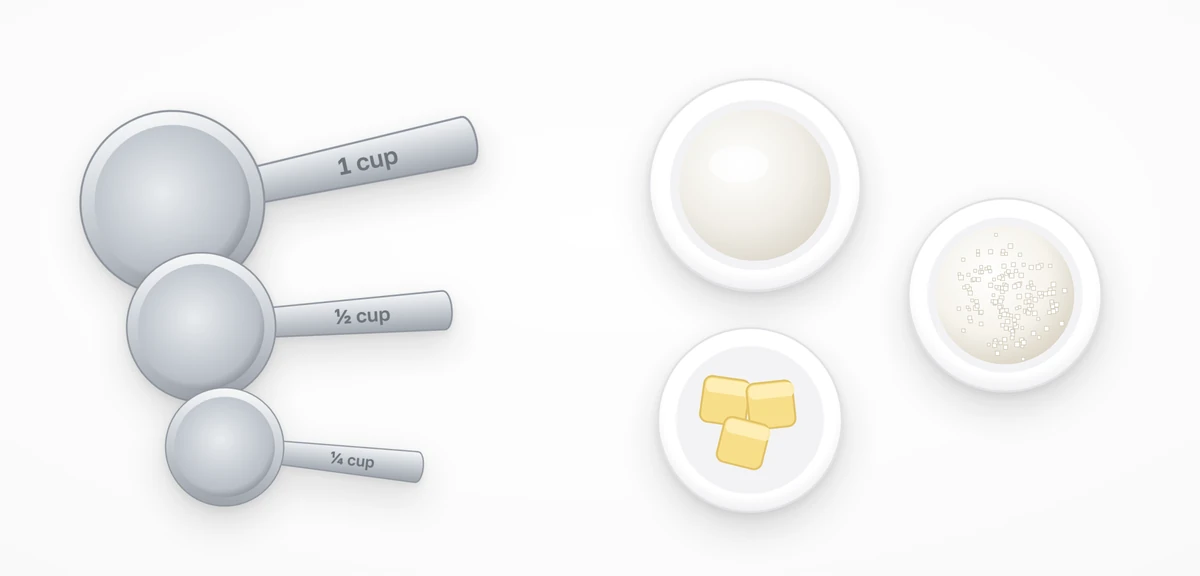
Most measuring cup sets include ¼ cup, ⅓ cup, ½ cup, and 1 cup measures. When converting ml, aim for the nearest fraction you can measure:
| If your conversion gives… | Use this cup measure |
|---|---|
| 0.12–0.13 cups | ⅛ cup (or 2 tablespoons) |
| 0.24–0.26 cups | ¼ cup |
| 0.32–0.35 cups | ⅓ cup |
| 0.49–0.52 cups | ½ cup |
| 0.65–0.68 cups | ⅔ cup |
| 0.74–0.77 cups | ¾ cup |
| 0.98–1.02 cups | 1 cup |
For amounts between fractions, use a combination — for example, 350 ml ≈ 1½ cups (355 ml) is close enough for most recipes.
ml to cups for liquids: milk, water, oil, cream
| Liquid | ml | US cups |
|---|---|---|
| Water or milk | 240 ml | 1 cup (1.014) |
| Heavy cream (recipe ½ cup) | 120 ml | ½ cup (0.507) |
| Olive oil (recipe ¼ cup) | 60 ml | ¼ cup (0.254) |
| Broth or stock (1 cup) | 240 ml | 1 cup |
| Coconut milk (1 can) | 400 ml | 1⅔ cups (1.691) |
| Wine or vinegar (⅓ cup) | 80 ml | ⅓ cup (0.338) |
Why European recipes use ml instead of cups
European and most non-US recipes measure liquids in ml (or grams) instead of cups because milliliters are unambiguous — a measuring jug shows the same ml value everywhere in the world. "1 cup" means different things in the US (237 ml), Australia (250 ml), and old UK recipes (284 ml).
When you cook from a TikTok or Instagram video and the creator's measuring cup looks different from yours — that's often why. Lupita normalizes all recipe measurements to grams and ml when it imports a video, so you always know the exact amount.
Import recipes from videos — all units handled
Lupita extracts recipes from TikTok, Instagram and YouTube. Display in ml, cups, tablespoons or grams — your choice.
Frequently asked questions
How many cups is 100 ml?
100 ml = 0.423 US cups — just under ½ cup (which is 118 ml). The difference is about 1½ tablespoons. For most recipes, you can round up to ½ cup.
How many cups is 250 ml?
250 ml = 1.057 US cups — just barely over 1 cup (by about 1 tablespoon). In Australia, Canada, and New Zealand, 250 ml = exactly 1 metric cup. Use 1 cup for US recipes.
How many cups is 500 ml?
500 ml = 2.113 US cups — 2 cups + about 2 tablespoons (27 ml). For most recipes, use 2 cups; for precise baking, measure 500 ml directly.
How many cups is 200 ml?
200 ml = 0.845 US cups, about ¾ cup + 1 tablespoon, or just under 1 cup. The nearest fraction is ⅞ cup (207 ml).
How many cups is 1 liter?
1 liter (1000 ml) = 4.227 US cups — roughly 4¼ cups. Or exactly 4 metric cups (since 1 L = 4 × 250 ml).
How many cups is 150 ml?
150 ml = 0.634 US cups — closest to ⅔ cup (158 ml). For most purposes ⅔ cup works fine; for precision, measure 150 ml directly.