 Lupita
 Measurements
How Many Grams in a Cup of Rice?
White rice: cups to grams
Long-grain white rice is the most common variety in Western recipes — it is the default when a recipe just says "rice." This table covers every cup fraction from a tablespoon to 4 cups.
| Amount | Grams (long-grain white) |
|---|---|
| 1 tablespoon | 12 g |
| ¼ cup | 46 g |
| ⅓ cup | 62 g |
| ½ cup | 93 g |
| ⅔ cup | 123 g |
| ¾ cup | 139 g |
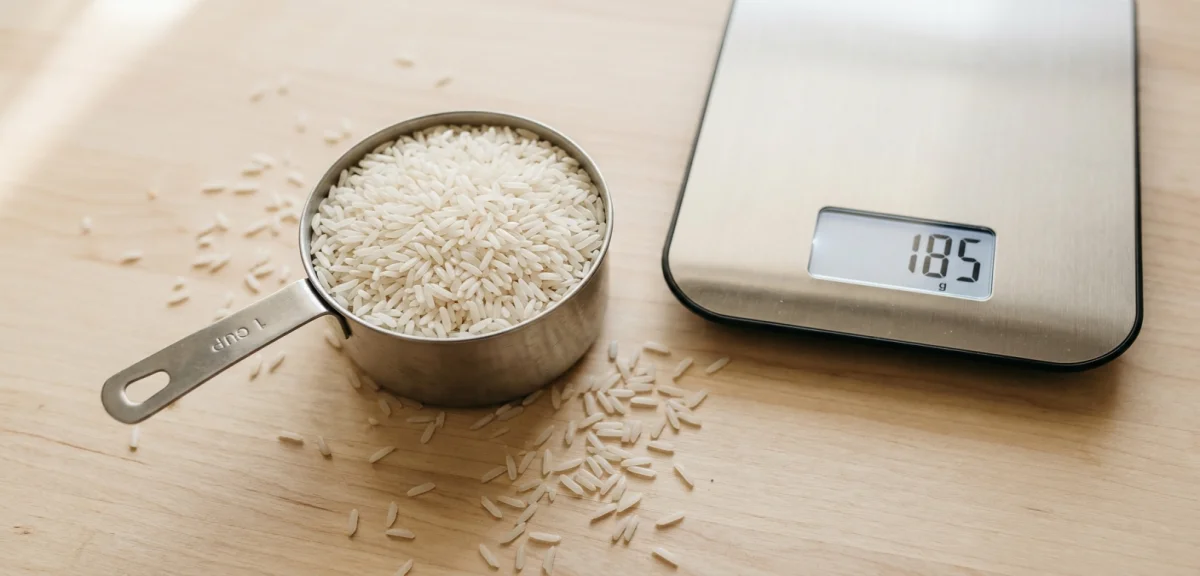
| 1 cup | 185 g |
| 1¼ cups | 231 g |
| 1½ cups | 278 g |
| 2 cups | 370 g |
| 2½ cups | 463 g |
| 3 cups | 555 g |
| 4 cups | 740 g |
All rice types: 1 cup in grams
Different rice varieties have different grain sizes and densities. Short-grain rice packs more densely into a cup than long-grain; wild rice, which is actually a grass seed, is notably lighter. The table below gives the dry (uncooked) weight for one cup of each type.
| Rice type | 1 cup in grams | Notes |
|---|---|---|
| Long-grain white rice | 185 g | The standard reference; used in most Western savoury recipes |
| Short-grain white rice | 200 g | Denser, rounder grains; used for sushi and rice pudding |
| Medium-grain white rice | 195 g | Between long and short in density; common in Spanish and Italian cooking |
| Basmati rice | 185 g | Long, slender grain; classic in Indian and Middle Eastern dishes |
| Jasmine rice | 185 g | Fragrant long-grain; staple of Southeast Asian cooking |
| Brown rice (long-grain) | 190 g | Whole grain; slightly denser than white due to the bran layer |
| Brown rice (short-grain) | 200 g | Dense, chewy; used in macrobiotic and Japanese-style cooking |
| Arborio rice | 200 g | Short, starchy grain; essential for risotto |
| Glutinous / sticky rice | 185 g | Also called sweet rice; used in mochi, Thai sticky rice, and dim sum |
| Wild rice | 160 g | Technically a grass seed, not rice; lighter and nuttier than white rice |
| Black rice (forbidden rice) | 180 g | Whole-grain; antioxidant-rich; used in Asian desserts and grain bowls |
| Red rice | 185 g | Whole-grain with red bran; common in Bhutanese and Camargue cooking |
Cooked vs uncooked rice weight
Rice absorbs a large amount of water during cooking, which dramatically changes its weight and volume. This is the most common source of confusion in rice recipes: a recipe might say "2 cups cooked rice" when you are starting from scratch with uncooked rice.
| Rice type | 1 cup dry (uncooked) | Cooked yield (approx.) | 1 cup cooked weight |
|---|---|---|---|
| White long-grain rice | 185 g | ~3 cups cooked | ~186 g |
| White short-grain rice | 200 g | ~2.5 cups cooked | ~200 g |
| Basmati rice | 185 g | ~3 cups cooked | ~185 g |
| Brown rice (long-grain) | 190 g | ~2.5–3 cups cooked | ~195 g |
| Wild rice | 160 g | ~3–4 cups cooked | ~164 g |
The cooked weight is higher than dry weight because water is absorbed — 1 cup dry white rice (185 g) absorbs roughly 370–400 ml of water during cooking, ending up around 555–585 g of cooked rice total.
Cup fractions for common rice types
This table shows four popular rice types side by side across the most common cup measurements.
| Amount | White long-grain | Brown rice | Basmati | Arborio |
|---|---|---|---|---|
| ¼ cup | 46 g | 48 g | 46 g | 50 g |
| ⅓ cup | 62 g | 63 g | 62 g | 67 g |
| ½ cup | 93 g | 95 g | 93 g | 100 g |
| ¾ cup | 139 g | 143 g | 139 g | 150 g |
| 1 cup | 185 g | 190 g | 185 g | 200 g |
| 2 cups | 370 g | 380 g | 370 g | 400 g |
| 3 cups | 555 g | 570 g | 555 g | 600 g |
How to measure rice accurately
Unlike flour, rice does not compress much when measured in a cup — the grains are dense and do not compact the way a powder does. This means cup measurements for rice are more consistent than for flour. That said, weighing on a scale is still faster and cleaner.
If you are using a measuring cup:
- Use a dry measuring cup (not a liquid measuring jug) for best accuracy.
- Scoop or pour rice into the cup.
- Level off the top with a straight edge — no need to shake or tap.
- Rice grains are naturally self-leveling, so this gives a consistent result.
For dishes where precision matters — risotto, sushi rice, rice pudding — weighing is worthwhile. A ±15 g difference in rice can affect the water ratio and change the texture of the final dish.
Frequently asked questions
- How many grams is 1 cup of rice?
- 1 cup of uncooked white long-grain rice weighs 185 grams. Short-grain white rice is 200 g per cup. Brown rice is 190 g. Wild rice is lighter at 160 g. These are all dry weights before cooking.
- Is 1 cup of rice 200g?
- For some types, yes. 1 cup of short-grain white rice and arborio rice both weigh 200 g. But 1 cup of long-grain white rice, basmati, and jasmine is 185 g. Brown rice is 190 g. So whether "1 cup = 200g" is correct depends on the rice variety.
- How many grams is 1 cup of cooked rice?
- 1 cup of cooked white rice weighs approximately 186 grams. 1 cup of cooked brown rice is about 195 grams. Cooked rice is heavier than you might expect because the grains absorb water — but a cup of cooked rice still weighs slightly less than a cup of water (200 g) because the grains don't pack as densely as a liquid.
- How many grams is half a cup of rice?
- ½ cup of uncooked white long-grain rice = 93 grams. ½ cup of brown rice = 95 g. ½ cup of basmati or jasmine = 93 g. ½ cup of arborio = 100 g.
- How many cups is 100g of rice?
- 100 g of white long-grain rice = 0.54 cups (just over half a cup). 100 g of brown rice = 0.53 cups. 100 g of arborio = 0.5 cups (exactly half a cup). 100 g of wild rice = 0.63 cups.
- How many cups is 300g of rice?
- 300 g of white long-grain rice = 1.62 cups (just under 1⅔ cups). 300 g of brown rice = 1.58 cups. 300 g of arborio = 1.5 cups.
- How much does 2 cups of rice weigh?
- 2 cups of white long-grain rice = 370 grams. 2 cups of brown rice = 380 g. 2 cups of basmati or jasmine = 370 g. 2 cups of arborio = 400 g. All figures are for dry, uncooked rice.
- How many servings is 1 cup of dry rice?
- 1 cup (185 g) of dry white rice expands to about 3 cups cooked. As a side dish, 1 cup cooked rice is a standard single serving — so 1 cup dry rice makes approximately 3 servings. As a main dish, 2 cups cooked per person is more typical, giving about 1.5 servings per cup of dry rice.
- Does rice weight change when cooked?
- Yes, significantly. Dry rice weighs about 185 g per cup. After cooking, 1 cup of dry white rice yields roughly 555 g of cooked rice (3 cups). The weight triples because each grain absorbs about 2× its dry weight in water.
Sources
- USDA FoodData Central — density and weight values for raw rice varieties
- Serious Eats — The Best Way to Cook Rice — water ratios and measurement methodology
- King Arthur Baking — Ingredient Weight Chart — reference weights for cooking ingredients