 By Sara, Lupita food editor · November 5, 2026 · 4 min read
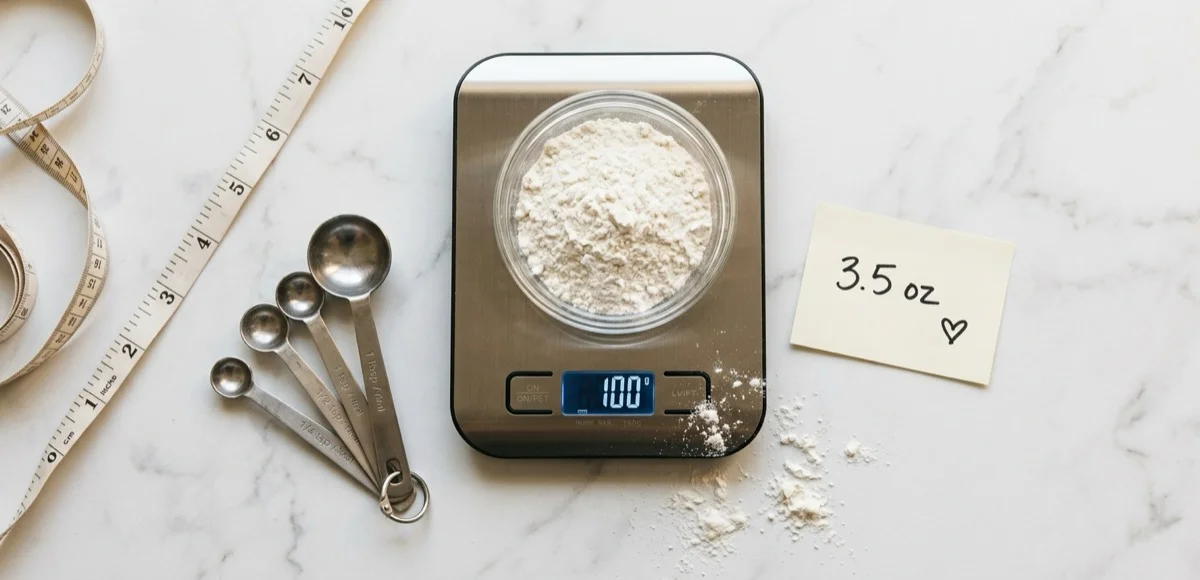
Quick answer: 1 oz = 28.35 grams. 2 oz = 56.7 g. 4 oz = 113.4 g. 8 oz = 226.8 g. 16 oz (1 lb) = 453.6 g.
In this guide
The exact conversion factor is 1 oz = 28.3495 grams, defined by the international avoirdupois system. For cooking you can round to 28.35 g — the rounding error across a full recipe is well under 1%.
Ounces → Grams: multiply oz by 28.35
Grams → Ounces: divide grams by 28.35 (or multiply by 0.0353)
Mental math shortcut: multiply ounces by 28 for a fast estimate. For 6 oz: 6 × 28 = 168 g (exact: 170.1 g). Close enough for any recipe.
US recipes list ingredients in cups and ounces. European and professional recipes use grams. This table eliminates the back-and-forth. For cup conversions, see our cups to grams converter.
Standard US cup = 240 ml. All ounce values are weight ounces (oz), not fluid ounces (fl oz).
| Ounces (oz) | Grams (g) | Notes |
|---|---|---|
| ¼ oz | 7.1 g | Typical spice pinch portion |
| ½ oz | 14.2 g | 1 tablespoon of water ≈ 15 g |
| 1 oz | 28.3 g | Standard reference |
| 1.5 oz | 42.5 g | Common shot glass volume |
| 2 oz | 56.7 g | Small chocolate bar |
| 2.5 oz | 70.9 g | — |
| 3 oz | 85 g | Standard meat serving |
| 3.5 oz | 99.2 g | ≈ 100 g (European standard portion) |
| 4 oz | 113.4 g | ¼ lb — cheese/meat portions |
| 5 oz | 141.7 g | — |
| 6 oz | 170.1 g | Typical yogurt cup |
| 7 oz | 198.4 g | — |
| 8 oz | 226.8 g | ½ lb — US butter stick |
| 9 oz | 255.1 g | — |
| 10 oz | 283.5 g | — |
| 11 oz | 311.8 g | — |
| 12 oz | 340.2 g | ¾ lb |
| 13 oz | 368.5 g | — |
| 14 oz | 396.9 g | Standard can of coconut milk |
| 15 oz | 425.2 g | Standard can of beans/tomatoes |
| 16 oz | 453.6 g | 1 lb — standard US package |
| 20 oz | 567 g | — |
| 24 oz | 680.4 g | — |
| 32 oz | 907.2 g | 2 lb |
Use this when a European recipe lists grams and you want to know how many ounce packages to buy.
| Grams (g) | Ounces (oz) | Notes |
|---|---|---|
| 10 g | 0.35 oz | — |
| 25 g | 0.88 oz | — |
| 50 g | 1.76 oz | — |
| 100 g | 3.53 oz | Standard EU portion reference |
| 125 g | 4.41 oz | Standard EU yogurt size |
| 150 g | 5.29 oz | — |
| 200 g | 7.05 oz | 1 cup granulated sugar |
| 225 g | 7.94 oz | ≈ ½ lb (common recipe rounding) |
| 250 g | 8.82 oz | EU butter block |
| 300 g | 10.58 oz | — |
| 400 g | 14.11 oz | — |
| 454 g | 16 oz | 1 lb exactly |
| 500 g | 17.64 oz | Standard EU flour bag |
| 750 g | 26.46 oz | — |
| 1000 g (1 kg) | 35.27 oz | 2.2 lb |
These are the conversions that come up most in everyday cooking — ingredients where US packages list ounces but European recipes call for grams.
| Ingredient | US package size | Grams |
|---|---|---|
| Butter (1 stick) | 4 oz | 113 g |
| Butter (2 sticks) | 8 oz | 227 g |
| Cream cheese (1 block) | 8 oz | 227 g |
| Dark chocolate bar | 3.5 oz | 100 g |
| Cheddar cheese (block) | 8 oz | 227 g |
| Greek yogurt (small cup) | 5.3 oz | 150 g |
| Chicken breast (medium) | 6–8 oz | 170–227 g |
| All-purpose flour (bag) | 5 lb (80 oz) | 2.27 kg |
| Can of beans / tomatoes | 15 oz | 425 g |
| Can of coconut milk | 13.5 oz | 383 g |
Buying tip: When a recipe calls for 200 g of chocolate and you only find 3.5 oz bars (100 g each), you need exactly 2 bars. Knowing the conversion saves a second trip to the store.
This is the most common source of confusion in US recipes. They are not the same thing.
A fluid ounce (fl oz) measures volume — it's printed on measuring cups and liquid bottles. A weight ounce (oz) measures mass — it's what a kitchen scale shows.
For water, 1 fl oz ≈ 29.6 g (close enough to treat as equal). But for dense ingredients the difference is significant:
| Ingredient | 1 fl oz volume | Weight in grams |
|---|---|---|
| Water | 29.6 ml | 29.6 g |
| Honey | 29.6 ml | ~42 g |
| Olive oil | 29.6 ml | ~27 g |
| Maple syrup | 29.6 ml | ~40 g |
| Milk | 29.6 ml | ~30.5 g |
Rule of thumb: if you're measuring a solid or a thick paste, use weight ounces on a scale. If you're measuring a thin liquid in a measuring cup, the fl oz ≈ g difference only matters for precision baking.
Import any video recipe from TikTok, YouTube or Instagram. Lupita extracts ingredients and converts everything to grams or ounces based on your preference.
Get Lupita — App Store1 ounce = 28.35 grams. For quick mental math, round to 28 g — the error is under 1.3% and won't affect any recipe.
100 grams = 3.53 ounces. Easy to remember: 100 g ≈ 3.5 oz. This is the weight of a standard European chocolate bar.
4 ounces = 113.4 grams. This is a quarter pound — a common unit for cheese slices, meat portions, and butter blocks.
8 ounces = 226.8 grams. Half a pound. This is the size of a standard US cream cheese block and two butter sticks.
16 ounces = 453.6 grams = exactly 1 pound. Most US packaged dry goods (flour, sugar, pasta) come in 1 lb (16 oz) bags.
250 grams = 8.82 ounces. The standard European butter block is 250 g — if a US recipe calls for 2 sticks of butter (8 oz / 227 g), one EU block is very close but 23 g more.
No. Fluid ounces measure volume, weight ounces measure mass. 1 fl oz of water ≈ 29.6 g, but 1 fl oz of honey ≈ 42 g. For baking, always use weight ounces on a scale, not the fl oz markings on a measuring cup.
Multiply ounces by 28. It's not exact (true factor is 28.35) but the difference is under 1.3% — invisible in any recipe. Example: 6 oz × 28 = 168 g (exact: 170.1 g).
1 pound = 16 oz = 453.6 grams. Many US grocery packages list weight in both "1 lb" and "16 oz" — both equal 454 g rounded.
 Lupita